Preschool is an important time for children to #develop social skills that will serve as the foundation for their future relationships. As young children interact with their peers, they begin to learn important social concepts like #empathy, cooperation, and communication. Fostering positive social interactions in #preschool not only supports their emotional and social #growth but also enhances their cognitive #development. For educators seeking structured training, consider our CDA Preschool Credential  Buy Now $400.00 or the short practical course Connections That Count: Building Relationships in Child Care Buy Now $55.00, both of which provide classroom-tested strategies and activity examples that support the approaches described below.
How can teachers encourage cooperative play?
One of the best ways to foster positive social interactions in #preschoolers is to encourage cooperative #play. Cooperative play allows children to work together toward a common goal, which promotes teamwork, communication, and sharing. Activities such as building a block tower together or playing group games help children learn how to collaborate and negotiate with others. For concrete activity plans and evidence linking play to social development, see our articles How Does Play Support Children’s Physical, Cognitive, and Social Growth? and Team-Building Activities for Daycare, which offer ready-to-use group games and reflection prompts. For research and practical ideas on how peer friendships specifically support social and emotional growth, see our article Better Together: Why Little Friends Make a Big Difference in Early Childhood.
- How to Encourage Cooperative Play: Set up structured activities where children have to work together, like group art projects or team-based games. Praise the children for working together and highlight the positive aspects of their teamwork.
How can adults model positive social behaviors?
Preschoolers often learn social behaviors by observing the adults around them. By modeling respectful communication, kindness, and good manners, # teachers and caregivers set the stage for children to adopt these behaviors in their own interactions. This can include using polite #language, offering help to others, and handling conflicts in a calm and constructive way. For extended strategies on teaching friendship and peer skills, consult our article How Can We Teach the Forgotten Skill of Being a Good Friend to Young Children?, which includes scripts staff can use during routines.
- How to Model Positive Social Behaviors: Demonstrate how to greet peers politely, say "please" and "thank you," and resolve disagreements peacefully. When children see adults practicing positive social behaviors, they are more likely to imitate them.
How can we teach conflict resolution skills to preschoolers?
Preschoolers are still learning how to navigate conflicts with their peers, and conflicts are an inevitable part of #early-childhood interactions. Teaching children how to resolve conflicts peacefully is essential for fostering positive relationships. Encourage children to #express their feelings, listen to others, and work together to find a solution. See our practical guidance in Teaching Problem-Solving Skills to Young Children for step-by-step scaffolds and simple classroom scripts.
- How to Teach Conflict Resolution: Provide children with simple phrases to express their emotions, such as "I feel upset when..." or "Can we take turns?". Help them brainstorm solutions and guide them through the process of compromise.
How can teachers promote empathy and understanding?
Empathy is a key social skill that helps children understand and respond to the feelings of others. Encouraging preschoolers to recognize and validate their peers' emotions is crucial for building #healthy, supportive relationships. Activities that involve role-playing or discussing different emotional scenarios can help children practice empathy and learn how to respond appropriately. Our article Building Social Foundations provides age-appropriate emotion-literacy activities and talk prompts you can use during circle time. The Montessori approach also offers classroom-tested strategies for cultivating empathy and teaching peaceful conflict resolution that many teachers successfully adapt for preschool settings.
- How to Promote Empathy: Use #books, stories, or role-playing games to teach children about different emotions. After reading a story, ask the children how the characters might be feeling and how they would
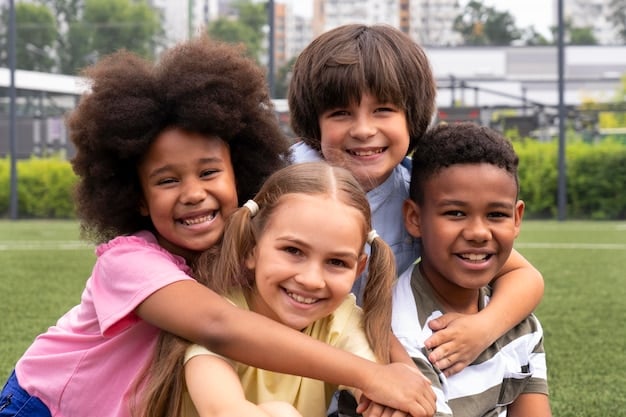 respond to those emotions.
How do we create a positive, inclusive classroom environment?
A positive and inclusive #classroom-environment fosters a sense of belonging for all children. By promoting inclusivity, teachers can ensure that every child feels accepted and valued. This helps children develop confidence and social skills in a #safe and supportive setting. For program-level strategies that support inclusion and peer relationships, see Supporting Social Relationships Among Young Children, which outlines environmental adaptations and staffing practices that reduce exclusion and increase peer acceptance.
- How to Create an Inclusive Environment: Celebrate diversity by incorporating materials that reflect different #cultures, backgrounds, and abilities. Encourage children to appreciate their differences and celebrate each other’s uniqueness.
What classroom routines support daily social-skills practice?
Daily routines are the backbone of consistent social skills instruction. Simple, repeated practices—greeting routines, choice time with paired tasks, and a short daily “feelings check-in”—provide multiple, low-stress opportunities for children to practice turn-taking, perspective-taking, and emotion labeling. Structure these routines so they include a modeled script, a brief guided practice with an adult, and an opportunity for peer practice. For example, during a five-minute morning greeting, a teacher can prompt children to say a peer’s name and one thing they like to do together; during clean-up, assign a two-person team to collaborate on a single bin, giving children a natural context to negotiate and share.
Embed micro-lessons in transitions (e.g., use a “stop-and-share” at line time) and pair those with explicit language that children can use: “Can I have a turn?” “I’m waiting.” “I feel sad when…” Routines succeed when teachers are consistent, provide brief feedback, and celebrate small successes. Practical resources and scripted routines are available in many ChildCareEd courses that focus on relationships and classroom management.
How can teachers assess and document social-skill growth? Ongoing assessment helps teachers target instruction and communicate progress to families. Use brief, behavior-focused checklists that record frequency and context (for example, how often a child initiates play, shares, or uses a conflict-resolution phrase across a week). Combine these observations with work samples (photos of cooperative projects), anecdotal notes from small-group time, and simple rating scales during free play. Data collection should be low-burden: a 2–3 minute daily note per child can produce meaningful trends over a month.
Link observations to learning goals (e.g., “initiates peer play twice per free-play session”) and use them during family conferences to set shared strategies. For providers preparing for credentials, courses such as the CDA Preschool Renewal include modules on documenting practice and creating professional portfolios that align observations with competency statements.
Training Resource: To deepen your understanding of fostering positive social interactions in early childhood, check out our CDA Preschool Renewal Buy Now $250.00 and related CDA courses which provide practical tools, lesson scripts, and documentation templates for #educators and caregivers.
Helpful Resource: For more in-depth resources on fostering social development in preschoolers, explore our Guide on Social and Emotional Learning in Early Childhood, filled with tips for enhancing emotional and social growth.
Article Link: For more tips on creating a positive preschool environment, read our article on CDAcertification.com
Call to Action: Follow Us for More Tips!
Want more advice on fostering positive social interactions and supporting preschoolers’ growth? Follow us on Instagram for daily tips, resources, and inspiration to enhance your teaching practice.
How can educators implement these strategies consistently?
Consistent implementation requires clear goals, a small set of routines, and collaborative problem-solving. Begin by choosing one or two targeted social skills (for example, turn-taking and emotion labeling), and create a week-long plan that embeds practice opportunities into morning routine, choice time, and circle time. Train all staff on the specific language to use and the quick prompts that scaffold child responses. Use brief documentation (two-minute notes) to monitor progress and modify the plan every two weeks based on observed data.
Engage families: share the same scripts and simple home activities so skills generalize across settings. Celebrate measurable progress publicly with children (class charts, praise) and privately with families (notes, brief conferences). Over time, integrate this practice into the program’s curriculum maps and staff meetings so it becomes part of professional routines rather than an add-on. For educators preparing professional documentation or credentials, ChildCareEd courses provide templates and portfolio guidance to document practice and show impact.
For additional resources and ideas, visit cdacertification.com or explore the ChildCareEd courses and articles linked above.
What are the key takeaways for building preschool social skills?
Start small and embed practice into routines: prioritize 1–2 social skills, use consistent language, model behaviors, and provide guided and peer practice. Use low-burden assessment (brief daily notes and simple checklists) to track progress, involve families with shared scripts, and iterate teaching plans based on observed data. These steps make social-skill instruction sustainable and measurable; ChildCareEd courses and the linked articles supply scripts, lesson plans, and documentation templates to operationalize them.
